Pages

Friday, January 1, 2021

The 2020 Book Review

Let's just get it out of the way - the obligatory "2020 was a rough year" comments. It was rough - but for me, it was good for reading - I read 81 books (I usually average about 50)! Reading was my port in the storm - or insert whatever cliched metaphor here that you would like. Reading sustained me. I've always been a big reader, but this year it was all that I wanted to do. It was an escape - but it was also a place of calm, where I could still my mind and take a break. We were on lockdown in China long before everyone else in the world was - and in a surreal twist that no one saw coming - we resumed a semblance of normal soon after. At the time we did not know it was "soon" (12 weeks of online learning seemed interminable - little did we know our peers in the rest of the world would be seeing whole semesters, possibly even a whole school year online). But despite the return to "normal" - nothing was normal. So reading continued to be a safe, solid place to find comfort in a truly crazy, heartbreaking, maddening year.

I hope 2021 is a calmer year, but I hope it still brings good reading - to me and to you!


On tracking my reading:


I have tracked my reading on Goodreads for exactly 10 years - in fact, on December 31, 2020 I read my 500th book - 500 books in 10 years.* (Yes, I did push to read just one more book to get to that number, of course - please note the time on the screen shot!). 

There have been some lean reading years and some fat reading years, so that's an average of 50 books a year, which is respectable. The 500 doesn't count all the books I read repeatedly for school, although I do record them the first time I read/teach them, even if I have read them before. It also includes re-reads, some of which I re-read during these past 10 years.

I also started tracking my reading in a physical notebook this year. I don't know why I haven't physically written down the books I've read before. It's been good because I see the books I have started but haven't finished, which is a little harder to see on Goodreads (I don't use the "currently reading" function by choice). I really like Goodreads, but I like having my private reading journal. Because of this I was able to finish 5-6 books before the end of the year that I had started but had set aside for one reason or another - books I liked but just got distracted by other, shiner books. 


Here are some of my notable (good and bad) reads of 2020.

Disliked


Normal People
 by Sally Rooney
I think it's a mark of a "good reading year" if you have to stop and think about the book you disliked because you can't remember intensely disliking one particular book, enough to write about. I did dislike books, but the good outweighed the bad. I had a lot of "2-star" reads (19 out of 81). My system for star-ratings is completely and utterly subjective. Sometimes it's because I just didn't like the book. Sometimes it's because it's poorly written. Sometimes both. I rarely give 1-stars, and I didn't have any, this year.

My least favorite book was Normal People by Sally Rooney. It was the 2nd book I read this year, and I don't really remember much about it. I remember the feeling of the book, which was "ick." It made me feel really, really, really sad. I feel really sad just writing about it, remembering it. This book was critically acclaimed and rightly so - it was well-written, and the characters were well-developed. It just showed a side of life that I really, really don't connect with.


Just Didn't Meet the Hype aka Unpopular Opinion Time

The Invisible Life of Addie LaRue by V.E. Schwabb

I have a real problem. Hype up a book and I will not really like it. I won't necessarily dislike it, but chances are, I won't really like it. My critical, English-teacher brain will find what's wrong with it. I'm so sorry (to all my friends and book friends who loved it...), but Addie LaRue was one of those books. I'd been hearing about it since...Spring? On book blogs and podcasts from advance readers. Everyone - everyone! - loved Addie LaRue

It was fine

But I wasn't amazed by it. I think I wanted to be, and that was part of the problem. 

Addie LaRue is the story of a young French girl in 1700-something who makes a deal with the Devil or a god to live forever - the twist is that she is forgotten by everyone she meets. Immediately - if someone turns around they forget her. The premise is really clever. I found the book itself to be, well, fine. A bit too long, and I wasn't rooting for the main character. I wasn't not rooting for her. I just wasn't...cheering her on. 

I would recommend Addie LaRue but as a decent read (not an earthshattering, knock-your-socks off one). I think I would have liked it more if I hadn't been told how much I would have liked it. But that's my problem - not yours!


Food for Thought


The Power
 by Naomi Alderman

This is not a book I would recommend to most. It's really, really, really graphic (like even more than Game of Thrones in parts) but really, really, really thought-provoking. In the world of this book, women develop a power - an electrical current that they can zap people with. Slowly over the course of the book, the power dynamics between men and women flip - women become dominant, men become submissive. The thesis of the book is quite simple: it's not about gender, it's about who has the power. If women were able to be physically dominant over men, they would be as aggressive, as dominant as men. I would not read this book if you are sensitive (or even not sensitive) to sexual violence. This book is something I will think about for a long, long time, however.


Favorite Reads (in order of reading)


Daisy Jones and the Six
 by Taylor Reid Jenkins

Okay, okay - this is a book that was tremendously hyped-up (at least in my book circles) and, surprisingly, I thought it lived up to the hype. It's an "oral" history of a (fictional) 1970s band. It could be gimmicky but I think Jenkins pulled it off. The writing - the craft of words and sentences - was excellent (particularly for a book written in transcript-style). It's a book about the nature of true love, the sacrifices that people make for one another, and the people that carry us through the hardest times of our lives. This makes it sound maudlin - it's not. It's one of the...truest books I think I've read. As in, it contains a tremendous amount of truth. 


Country Driving
 by Peter Hessler

Hessler was a US Peace Corps volunteer in China in the nineties, and stayed on as a journalist in the aughts. He speaks Mandarin fluently and is really good at getting (Chinese) people to open up to him. This book is really three books in one - it's quite long, and took me probably about six months to read because I read it here and there, not in one fell swoop like I read many books. In part 1, he rents a car and attempts to travel the length of the Great Wall. He write about the people he meets along the way. In part 2, he writes about a small village outside of Beijing where he rents a house for a writing retreat. He befriends a local businessman and writes about their friendship and the changes that come to the village with the paving of the road. In part 3, he goes to Wenzhou in Zhejiang province (my province!) and spends time in a factory that makes bra o-rings (the little plastic coated rings that hold brassieres together). This book showed me a lot about the under-the-surface aspects of China I knew I did not know, but do not have the language or relationships (in part due to language) to access. I would recommend it to anyone who lives in China, but also to those who don't. I think China is going to be the dominant world power a lot sooner than we Westerners realize, and reading this book helps to humanize the people here. By this I mean so often China is presented as this cultural and ideological monolith and I think the individual 1.4 billion people are forgotten by most Westerners - but there are 1.4 billion individuals living here and the sum of them is more than their government and leadership policies that seem to threaten the Western way of life and ideology.


Draft No. 4: On the Writing Process by John McPhee
This slim volume is all about the craft of writing. If you have any interest in writing, read it. John McPhee is a writer for The New Yorker, Time magazine, and many others and he is a professor of writing a Princeton. Despite this fine writing pedigree, this book is quiet, realistic, and unassuming.


The Last Policeman series, Ben H. Winters

There are three books in The Last Policeman series. The main character, Henry, is a police detective in Concord, MA. In six months, the earth will be struck by a species-ending asteroid. Despite this, he is still committed to solving cases. The first book deals with a relatively ordinary murder, but the second and third, while still mysteries, are more about the effects of the impending asteroid on human society. I read these books spaced apart, because I typically do not "binge read" series (I find I get a little burnt out on the books if I read so many books of the same author all at once). I think these books should be read together, however. They are quite short, and the stories pick up one after the other, and they take place in the six months before the asteroid strikes. They are quiet, contemplative reflections on human nature in the face of impending disaster. 


The Vanishing Half
 by Brit Bennet

The story of two twin sisters, one who choses to pass for white and who consequently cuts all ties with her Black family. This is a complicated story, and a well-told one - incidentally Brit Bennet is young (she published her first novel at 26) and writes so well. In a year where race was dragged (rightly so) to the forefront, I found fiction to be the best place to seek understanding of what has - or hasn't - been done and what needs to change. I read non-fiction about the Black experience and struggle this year, but it was in fiction that I found the best understanding and empathy. I don't exactly know why that is, but I think stories act as bridges to reality. I also read Brit Bennet's first work, The Mothers this year, which I also really liked and recommend. 


Underground Airlines
 by Ben H. Winters

Yes - this is the same Ben H. Winters as The Last Policeman. This is a world of alternative history - what if the South won the American Civil War, and the southern states never abolished slavery? It takes place in contemporary America, but one in which slavery - a more polished, "humane" slavery - still exists. The main character, a Black man, is a bounty hunter for the Northern US government to apprehend runaway slaves and/or agents in the "underground airline." This book was incredibly thought-provoking, perhaps in large part because he creates a startlingly believable world - a world that is not that much different from the world we live in today. I think everyone should read it. It is not an easy read but important.


The Wednesday Wars
 by Gary D. Schmidt

I don't read middle grade very often (I think this one is in that on-the-fence spot between middle grade and YA) but I picked this up after the name kept coming up in various places. The story takes place during the Vietnam war. The main character is Presbyterian, and in his small New England town, every Wednesday afternoon the Catholic kids and the Jewish kids go to religious studies classes, but being Presbyterian (no religious studies classes offered), he stays back at school. His teacher is not happy about having to mind one student for the afternoon and at first is quite negative but eventually the boy wins her over. They start studying Shakespeare together which sets off a whole series of events; hilarity - and tenderness - ensues. It's a book that's hard to describe - but it's laugh-out-loud funny in parts. It's sweet and wonderful. 


The Searcher
 by Tana French

Tana French can write atmosphere like no one living today. She is maybe - maybe - matched by Edgar Allan Poe - but I think she could even give Poe a run for his money. When I read French's books I'm always left with a feeling, one I can't really describe - the feeling of when a mood in a room shifts but you don't know when the moment slipped from light to dark, the feeling of the sun setting on a cloudy day, the feeling of not knowing what's going on, but knowing you don't know. She writes about...the gloaming so well. This book is a stand-alone outside of her Dublin murder mystery series, nor connected to The Witch Elm (which I h a t e d). The main character is an American ex-police detective who moves to Ireland and buys a fixer-upper farmhouse in a small Irish farming community. He is approached by a young boy to help him find the boy's missing older brother. This is not a fast book. It's slow and criticized for being slow but I didn't notice that it was slow. She does pacing so, so well. You don't even notice you are holding your breath until you're gasping for air.


All the Light We Cannot See
 by Anthony Doerr

I'm quite late to the All the Light We Cannot See party (it won the Pulitzer in 2016, I think) but I'm so, so glad I got there. I thought this book was beautiful. It's long - 500+ pages - but doesn't feel long. It follows the duel stories of Marie-Laure, a blind girl living during the German occupation of France in World War 2, and Werner, a German boy with a knack for radios who is fighting on the German side in the war. The writing is remarkably well-crafted. Incidentally, I never think I like World War II stories, and the funny thing is, I think I've liked every WW2 book I've read, from reading The Diary of Anne Frank in the fifth grade onward. This is a book I look forward to reading again. 


Miss Benson's Beetle
 by Rachel Joyce

I am not an audiobook person, but we are reading this book for our January book club and I decided to try the audiobook as I wanted to get some crocheting done over my Christmas break. I think I would have liked this book as much if I had read it on paper, but I really loved the audiobook, read by Juliet Stevenson (I liked her so much I'm listening to North and South by Elizabeth Gaskell also read by Stevenson). This book has so many of the things I love. I'm an Anglophile through and through, and I love books about somewhat eccentric English characters. Miss Benson is a 46-year old single woman teaching domestic sciences at a girls school in London and hates it. She quits her job suddenly one day and sets off on an expedition to find a rare beetle in New Caledonia. It's quirky, upbeat, heartwarming. It's not Great Literature, perhaps, but it was a really lovely read to finish out the year.


Honorable Mentions:

The Wayfarers Series by Becky Chambers - A fun, creative sci-fi series: Book 1 - Long Way to a Small Angry Planet, Book 2 - A Closed and Common Orbit, Book 3 - Record of a Spaceborn Few

The Breadwinner by Deborah Ellis (middle grade fiction) (p.s. This is Dev's (a former student) favorite book - and if you know Dev you know that's pretty impressive [he hates reading] - and it's why I read it. I'd have to say, if you only like one book, this is a good one to like). 

Kim Jijyoung, Born 1982 by Cho Nam-Joo

Olive Kitteridge by Elizabeth Strout

The Lager Queen of Minnesota by J. Ryan Stradel

Beach Read by Emily Henry

Anxious People by Fredrick Backman

The Year of Magical Thinking, Joan Didion


Obviously I read a lot of good books this year. May this list inspire you for some good reads in 2021. I hope that 2021 is nothing like 2020 - but if it is (and it might be, friends, it might be) - I hope you find solace in books (and friends, and good food, and family, of course!)

What was the best book you read in 2020? 

Happy Reading!


*Incidentally, I have been writing these book reviews for 9 years now which coincides with when I started tracking my books on Goodreads (the first time I ever really kept track of my reading) - my first blog book review was about my 2011 reads. My favorite book of 2011 was The Help by Kathyrn Stockett - which I still wholeheartedly recommend.

Tuesday, January 28, 2020

The 2019 Book Review

2019 was a really good reading year. I'm not sure why - I didn't set out to read a lot of books. I set my modest book goal at 40 - that's less than one a week. And I read. And I read. And I read. To be honest, I also feel like I watched a lot of TV, so I could have read more - but I'm pleased with the amount of books I read, which was more than double what I read last year.

So, without much further ado, let's get to the books: The good, the great, the meh, and the ugly (not in that order):

Disliked So Much I Wanted To Throw My Kindle Across the Room (But didn't because it would hurt my Kindle):
The Buried Giant by Kazuo Ishiguro
To be honest, I didn't understand this book, and I think that's why I hated disliked it. I just don't think I'm smart enough to understand this book. BUT I have read books that I didn't understand but still liked - so don't think this is some kinda "I don't get it so I hate it" kind of thing. Even though it is. I think. It was so obscure, so "deep" that it just didn't work for me. I get that it was about memory (I think?) but other than that, I felt like it was pointless. I kept reading it hoping that it would all fall into place, because guys, this is Kazuo Ishiguro! Writing about Arthurian England!

Nope.

If you have read it, and you "got" it, could you please write me a five-to-seven paragraph essay explaining it? That would be great, thanks. I'll get back to you on the rubric.


Not Worth All the Hype [Okay, this sounds mean-spirited of me - I just mean, a book that had SO MUCH HYPE and for me, didn't live up to the expectations. I'm not saying don't read them. I am saying...don't hype them up so much, and let their stories just be]:

Recursion by Blake Crouch*
I read Crouch's Dark Matter about a year before Recursion was released, and really enjoyed it (see below). And then, 2019 was like, the year of Recursion. Everyone was reading it and r a v i n g about how groundbreaking it was, blah, blah, blah, and I was like...yeah, it was good...but that good? That groundbreaking? I don't know. It was a good read. But it didn't make me think about it for a long, long time like Dark Matter.

Where the Crawdad Sings by Delia Owens
Again, good - but as amazing as everyone says? Eh. *insert shrugging emoji* (Sacrilege! Reese Witherspoon said she didn't want it to end! How dare you disagree with Reese Witherspoon's taste in reading!) Look: it was a sweet story, with some structural and characterization problems. It's definitely a worthwhile read. But it didn't shatter the earth beneath my feet or anything.

True confessions: I must admit that I have a HUGE bias when it comes to hyped books. When a book is plastered everywhere as Amazing and Earth-Shattering and Must Read and endorsed by celebrities, I'm skeptical. And this impacts how I read the book, because honestly, I'm looking for problems rather than enjoying the story. Stop overhyping books, media! Just let the book be the book and let readers discover it for themselves. I'm not talking not promoting a book - but over-promoting a book is a problem, at least for me.)

And with that little confession about how I don't like over-hyped books, I am now going to tell you about the books I loved and hope you read and love, too. But don't take my word for it. Just read them. Ignore the fact that I recommended them. Just, pretend that you heard they were terrible or something. I don't know. Don't be like me and be biased just because someone told you it was good.


Honorable Mentions/Runners Up (I told you it was a good reading year!):

The Spirit Catches You and You Fall Down by Anne Fadiman*
For me, this was a great year of reading nonfiction (as in...I actually read nonfiction for once). The Spirit Catches You was excellent - if you haven't read it, do. This book is about the Hmong people of Southeast Asia, and the conflict between an refugee Hmong family in California and American doctors over the treatment of their daughter's epilepsy. I think everyone who works in a cross-cultural environment (medical or not) should read it simply for the questions it raises: how do we respect the cultural and religious practices of people from cultures different from our own? And how do we effectively meet the (medical) needs of people who have an utterly and completely different world view from our own?

Falling Together by Marisa de los Santos*
This was a sweet little romance. It's a little off the beaten path (as in, I don't think many people have heard of Marisa de los Santos) but she is a really, really good wordsmith. As in...she writes well. I don't just mean the stories and characters but the way she puts words together is actually magic. And the story was pretty good, too.

Ayesha at Last by Uzma Jalaluddin*
A Pride and Prejudice retelling set in a Muslim community in the suburbs of Toronto. I liked this book because the author used the framework of the original story, but made it her own thing. All the elements were there, but it was also original. This was actually the 2nd P&P retelling I read this year set in a Muslim context - the other was was Unmarriageable by Soniah Kamal which was also good (but not as good as Ayesha at Last so if you had to choose, read Ayesha). Because the Muslim community is still fairly conservative (in comparison to mainstream Western culture), it makes it a realistic setting for a P&P retelling. It's really good - read it (especially if you like or love P&P - Pride and Prejudice retellings are a dime a dozen but this is worth the read).

My Lady Jane by Cynthia Hand, Brodi Ashton, and Jodi Meadows (yes - 3 authors!)*
This book was so weird and quirky and snarky - who would think to write a young adult novel about the doomed Lady Jane Grey of Tudor England? No, really? Who? This book combines revisionist history with magic and teenagers. I don't know why, but it works. It's fun and silly, and for me it hit all the right notes. The narrators reminded me a little of the narrator of The Princess Bride. I recently read My Plain Jane by the same authors, and it's quite similar in snark and quirk and weirdness.

Tell Me Three Things Julie Buxbaum*
This is a YA novel about a teenager whose mother has died from cancer, and whose father has quickly remarried and moved her across the country from Chicago to LA to live with his new wife. The main character starts at a new school, and gets a friendly but anonymous email giving her inside information on how to navigate the cliques of the school. It's sweet and smart, while also being authentically thoughtful about the grief that comes with losing a parent at that age. I recommended this book to my students while I was reading it - it was that good.


My Favorite Reads of 2019:

The One in a Million Boy by Monica Wood*
I didn't think I would like this book. I really only picked it up because I heard it recommended on "What Should I Read Next," (my favorite podcast) several times by several different kinds of readers, readers whom I felt like I related to in their reading choices and preferences - so I took a "risk" and tried it. The story is about an almost-100-year old woman who is befriended by a boy who (most likely) has autism, and who obsesses over the Guinness Book of World Records. You never really meet the boy - he has died before the start of the story (not a spoiler), and the book is about the fallout of grief because of his death, but also the relationships that are found through the people who loved him. I don't like sentimental books. While this book was sad, it wasn't sentimental - it was thoughtful, provocative, funny. I think it was one of my favorites for the year because I was so surprised I liked it. For fans of The Man Called Ove by Frederich Bachman, this is similar - curmudgeonly older person and the people who come into their lives that soften them and make them realize how good they have it (not a spoiler).

The Almost Sisters by Joshilyn Jackson*
This is another book that is probably a favorite in part because its goodness surprised me. The Almost Sisters is about a woman who finds herself pregnant as a single woman after a one-night stand - it's important to note, for the plot of the book, that the woman is white, but her partner was black. In the midst of her pregnancy, she suddenly has to take on the care of her ailing grandmother. The story takes place in the South, and the main character's grandmother is white, and lives with her best friend, who is black. The two grew up together (the friend's mother was the grandmother's housekeeper). I did not know what to expect from this story, and I resisted reading it first, because I thought the cover was stupid (it is - the designer clearly hasn't read the book), and second, because I didn't think I would like it...I tend to not like Southern fiction (sorry to my dear Southern friends!). But I did finally read it and I'm so glad I got over my dislike-of-Southern-fiction bias - the story is really well-crafted, the characters rich. It's also quite humorous, while simultaneously maintaining its seriousness. I'm not doing it justice with this description - just know that it is a thoughtful reflection on race in America, as well as how racism impacts families and relationships over the generations. And it somehow manages to be funny and not preachy at the same time.

Dreamland: The True Tale of America's Opioid Epidemic by Sam Quinones
Everyone should read this book. E v e r y o n e. Particularly people who live in North America. Dreamland is a book that I couldn't stop thinking about while I was reading it, and long after I read it. Dreamland is actually the reason I'm motivated to write this book review this year, because I think it's really important and I wanted to tell more people to read it. It's about the opioid epidemic in the United States. It's well-researched and well-written. It's just very well done, and I think it's an important book for people to read, and hopefully, act upon. I really had no understanding of the opioid epidemic before I read this book. I knew, vaguely, there was a problem. I didn't understand why there was a problem. Now I do. Now I want to make sure we elect people who are aware of the problem, and who have good strategies for combatting it. This book makes me feel ashamed that I did not know more. It made me more compassionate towards people who have a drug addiction. For me, it was just one of those books that opened my eyes to a world - a very vast world - that I have so little awareness of, but inexcusably so. I feel like I'm sounding very, very preachy but I just think that as Americans, in particular, we have no excuse to not be aware of this problem in our country.


A few 2018 honorable mentions (since I didn't write a review):

Scythe Neal Shusterman*
This story takes place in a future in which death has been eliminated - to temper the population growth, there are state-sanctioned "Scythes" who have a quote of people to kill each year. I can't stop recommending this book to my students - they love it. You'll love it, especially if you like philosophy and ethics. And young adult fiction.


Dark Matter Blake Crouch
I thought about this book for a long, long, long time after I read it (the books that make me think aren't always my favorite, I promise - The Circle by Dave Eggers was terrible but it gave me a lot to think about).

It's a physics thriller.

Yes. You read that right.

A physics.

Thriller.

Blake Crouch released Recursion this year, which was decent - but I think Dark Matter was better (admittedly probably because no one told me it was the most amazing book I would ever read in my life ever).

Born a Crime Trevor Noah
First of all, t's important that everyone understands that Trevor Noah is basically my soulmate (he may just doesn't know it yet - I don't know, he may know by now because I say this a lot in really inappropriate places, like in front of a classroom full of teenagers who have access to social media). I love him. (Move over, Benedick Cumberbatch.)

Born a Crime is just...really good. It's the story of his childhood in South Africa. Noah is literally "born a crime" as the child of a white father and a black mother. We listened to it on audiobook while road-tripping to the Grand Canyon. If you get a chance to listen to the audiobook, do. Usually I don't recommend audiobooks (they put me to sleep or I begin to daydream immediately) but Born a Crime is well-done (and narrated by my bae, Trever Noah himself).

The Way of Kings Brandon Sanderson
My brother recommended this book, and series, to me when I was lamenting that Scott Lynch and Patrick Rothfuss still haven't released sequels to the next book in their series (it's been nearly a decade for each). The Way of Kings is well-written, has real, rich characters, good world-building, and thoughtful but not in-your-face themes (sometimes I find fantasy and science fiction can be a bit...didactic). And, the great thing about Sanderson is that he actually finishes what he starts. And each book is like a 1000 (well-written) pages, which is great.


Friends and Readers and Non-Readers: I hope this gives you some reading inspiration for 2020. Just. Read. Books. Don't worry about reading a certain amount, even though reading challenges can be fun. You don't have to read high brow literature, or the latest, hot, trending book. You don't have to read more nonfiction (or less nonfiction). You don't have to be embarrassed about reading a "beach read" or a fantasy or a bodice-ripper romance. Just read. Read what you want to read, not what you feel like you have to read. Stop reading books that aren't working for you (unless it's for school, and just suck it up and read it, okay?). Don't stall out of reading entirely because you feel obligated to finish a book. Pick up another one - maybe that one wasn't right for you at that point in time. You can always go back to it and try again. But Don't. Stop. Reading. I'm saying this as Ms. Bowers and Danielle. Reading is good for the soul - I believe that as firmly as I believe just about anything.

What did you read in 2019 that was worth celebrating?

*By the way, 7 out of the 8 books under "Honorable Mentions" and "Favorites" I read because I heard about them on the "What Should I Read Next" podcast. If you like books, and want to hear people talk about books, and get book recommendations - you should listen to it. I've marked the books I picked up because of that podcast with an asterisk - just so you know.

Sunday, January 21, 2018

The 2017 Book Review

Hello friends! It's time for the 2017 Book Review!

(I'm going to pretend that I haven't not blogged (hello, double-negative) for the past um, like, 7 months, and just dive right in.)

It's a rainy, chilly Sunday afternoon in Hangzhou. In other words, perfectly normal. I'm sitting in Starbucks, marking some papers, reading, and enjoying the ambient sounds around me. I realized this afternoon that I love sitting in coffee shops where I can't understand the people around me, because I get the background noise without picking up conversations and getting distracted by listening in. Actually - false - I love listening to conversations in coffee shops, but I don't always get that much done. This afternoon as some English speaking people came and invaded MY Starbucks space, I was forced to eavesdrop, and didn't get as many assignments marked. Rude. (Them, not me for eavesdropping, obvs.)

Anyway, on to the book review!

It was a good year for reading. Over the summer, I spent a month in Mali with limited internet access, and rather than binge-watching TV shows, I binge-read books. I think I read about a book and half every two days. It was glorious! I miss it. The simpler times. The not feeling guilty when I pick up a book for pleasure reading. The not feeling like I have to prepare discussion questions or essay questions about a book.

There are pros and cons to being an English teacher. Man, I love discussing books. But I also sometimes miss the books I teach now from before I taught them. I'm weird, I know.

Hated but Recognized the Quality Because I'm a Flippin' English Teacher
The Dinner by Herman Koch.
This a novel about two couples who meet to discuss a mutual problem. It's got a lot of literary quality, and I get that. But I really hated it. I think it made me uncomfortable, and it made me feel a little sick. And, I think that kind of visceral reaction was intended by the author. But it's not something I would pick up for fun, and while I like thought-provoking novels, I really don't like novels that ultimately make me feel sick to my stomach at the thought of them.

The Gunslinger by Stephen King *quickly ducks as objects are thrown at my head*
I know that King is like, a big deal. And a phenomenal writer. But I just didn't get The Gunslinger. Like, not at all. I mean, I got it. But I really, really didn't. And I don't want you to tell me about the symbolism and all that crap. I just prefer to not get it, and move on with my life, and not watch the mini-series even if Idris Elba is starring in it and he's amazing.

The Worst:
Sense and Sensibility (The Jane Austen Project) by Joanna Trollope
This is not THE Sense and Sensibility. There's a project that has modern authors re-imagining Austen's books for contemporary times. And, most of them are about as bad as you might think, with one exception - Alexander McCall Smith's (of The Number One Ladies Detective Agency) acceptable adaptation of Emma. For some reason, despite having read several bad ones, I still read the Sense and Sensibility adaptation, and I wish I could get those hours back. It was just...lousy. I think Joanna Trollope is supposed to be a pretty well-known author, but I've never read anything else by her, and now, never will. She took a really cool opportunity to retell Sense and Sensibility in a contemporary way, and dashed it upon the rocks of broken dreams.

Just read the original.

Resounding "Meh":
In Cold Blood by Truman Capote *ducks again*
I know, I know. I really shouldn't have this on this list. But, while a good book, in the age of true crime novels and shows and Game of Thrones, it was pretty tame by comparison. I wish I could have read it before I became desensitized to this kind of thing. I expected it to be so much more shocking - and it wasn't. Not because it's not. But because it's not shocking, anymore, in a world where parents can chain up their thirteen children for years on end, and children are recruited on the internet to join evil terrorist groups.


Absolute Fluff but still Enjoyable:
Truly, Madly, Guilty by Lianne Moriarty
It's a beach read (or a curled-up-on-the-couch on a rainy day read), and it's really fluffy. But, I enjoyed it (it's a little exasperating till the middle of the book when The Thing That Happened At the Barbecue is finally revealed). And, the title is kind of a misnomer. I almost always enjoy Lianne Moriarty, although I frequently forget if I've read a particular book by her because they all sound the same. (I started Big Little Lies in a six month period not once, but twice, having forgotten that I read it already. (That doesn't sound like much of an endorsement...).)


Recommendable Re-Reads:
Looking over my reading list for 2017, I realize I re-read a lot of books. I'm not sure why - some years I just am in the mood for a books I've read before, I guess. Here are the ones that stood out:

The Handmaid's Tale by Margaret Atwood
I had to re-read The Handmaid's Tale because it was part of the curriculum for a class that I teach. And I didn't re-read it because it was trending, and everyone thinks Trump's America is turning into Gilead (it's really not...read the book). I read The Handmaid's Tale in high school, and I didn't remember feminist and pro-choice rhetoric, while that certainly exists in the book. I don't think I was really tuned to that kind of thing in high school, sheltered missionary kid that I was. Am. I do remember being challenged by what women have had to endure throughout the thousands of years of our existence. I remember thinking that the conditions of the women in Gilead reminded me of what I had read about in the Middle East, and it made me want to do something about that. Around the same time, I read The Nine Parts of Desire by Geraldine Brooks, which explores the treatment of women in the Muslim world. My associations with two books are kind of intertwined in my mind. So, while I know that Atwood's novel is a parable warning against the religious right in America rising up - I think it's a parable for all kinds of extremism, and the things that humans do to have power and control over one another.

I Capture the Castle by Dodie Smith
This book is party comedy, part diary (well, it's all diary), part romance. It's surprisingly excellent, thought-provoking, and laugh-out-loud funny. It deals with the coming-of-age of sorts of the main character, Cassandra, her unconventional family, and a whole lot of antics (I love antics). The humor, and the antics, reminds me a lot of Cold Comfort Farm by Stella Gibbons. It's delightful - read it. Don't watch the movie. It's stupid.

Attachments by Rainbow Rowell
It's a simple love-story set in the late 90s, around the time when companies started realizing that email could distract their employees from doing their work. The main character is hired to monitor employee emails and falls in love with one of the women who's emails keep getting flagged. Does it sound creepy and corny? Yes. But I don't really read romances, so, trust me when I tell you this is sweet and funny, and makes you feel all the feels without feeling like you're reading trash.


Thought-Provoking:
The Circle by David Eggers
Let's establish something first: the writing is terrible. I mean, just terrible. Like someone is beating me over the head with a very dull, boring stick. However, the concept is fascinating and extremely thought-provoking. I read it around the same time I was teaching a language and social media unit to my students, and honestly, I couldn't stop talking about it, and seeing the connections everywhere. I think it has a healthy warning about our dependency on social media platforms. The writing is terrible (did I mention that already?), but I would actually recommend reading it because it's got an important message. And I rarely ever forgive bad writing.

The Bluest Eye by Toni Morrison
I wanted to challenge myself to read more African American authors this year, especially the classics. I had never (much to my chagrin and shame) read The Bluest Eye. The writing is remarkable (honestly, it's genius) and the content horrific. I don't like reading books about sexual abuse, especially sexual abuse of children. However, this book made me think, pushed up against my comfort zones, and wormed its way inside them, wiggling around in my head long after I finished. It's not a comfortable book and it's not supposed to be. But I think (if you're over 18 because of the sexual content) you should probably read it.

The Buddha in the Attic by Julie Otsuka
This -- novel? Account? Novella? is about the Japanese "Picture Brides" who came to America from Japan to marry Japanese immigrants. The book traces their story from their arrival in San Francisco to the 1940s when so many Japanese were put in internment camps. The curious thing about this book is that it's written in the plural first person - "We" - rather than the third or first person. It's fascinating, heart-breaking, and challenging.


Favorite Reads:
A Man Called Ove by Fredrick Backman
A curmudgeonly old man who slowly warms up to the people around him (spoiler alert, I guess). This book is more than a "feel-good" read, although you may feel good at the end, sorry-not-sorry. I love books about communities and people slowly coming together, despite oppositions. This book has some bitter-sweet notes on growing old, being lonely, and losing the people you love. It's a bit of a blunt and startling start, but it gets better. Actually, it gets wonderful.

The Summer Before the War by Helen Simonson
The main character is hired as a teacher in a small town just before the eve of World War I. It's funny, romantic, and bittersweet. The mood and tone of the book reminds me a lot of The Guernsey Literary and Potato Peel Pie Society by Annie Barrows (thought The Summer Before the War is not epistolary). Helen Simonson also wrote Major Pettigrew's Last Stand, which is excellent (though set in contemporary times). Both are really special.

Ready Player One by Earnest Cline
I was a little skeptical about this book - the description just didn't seem like "me" - video games? Virtual reality? 80s trivia galore? But while these three things form the basis of this book, it's much more than that. It's funny, adventurous, thrilling, and just entertaining. The concept is actually quite fascinating - a future society fifty years or so from now where people have almost completely escaped into virtual reality to escape the failing world around them. As entertaining as this book was, this book also made me think a lot about the implications of our reliance on technology today, and the power of story. Most people I know who read this book enjoyed it, even those who were skeptical like me. Try it - you'll like it!


And, since I didn't write a 2016 review (for shame!) here's one book I really, really liked in 2016:

Uprooted by Naomi Novak
It's a retelling of a Russian fairytale, and it's magical (but pretty dark). I love, love, love a good fairytale retelling (Beauty by Robin McKinley is one of my absolute favorite books). I don't know what fairy tale it retells, but it has many of the tropes of all the fairy tales we are familiar with in the West. This book left me wanting to reread it immediately. I didn't - but I will be rereading it this year for the sequel of sorts (set in the same "universe").


Have you read any of these books? What did you think of them? And what are you looking forward to reading this year? And what was your best read of 2017? Recommendations are always welcome!

Check out my previous book review posts:
2015
2013-2014
2012
2011Part II Part III 

{Thanks for reading...and pretending, with me, like I'm not the worst blogger in the world. I like blogging, I like writing, but I haven't had a lot of inspiration lately, or I've been reticent to share. I think I've become a lot more private in recent years - perhaps as my communities have grown, so has my willingness to what's on my mind, even the silly stuff. I'd like to get back to blogging a bit more in 2018, but heaven-forbid I call it a New Year's Resolution. More like...a New Year's That'd-be-nice-if-I-did. Cheers, friends.}

Thursday, December 31, 2015

The 2015 Book Review

Drum Roll, please.

Why? Because it's time...for...the...2015 Book Review! I know, I know - you've all been waiting eagerly for this post to appear in your social media feeds, and waiting, eagerly for me to tell you what to read in 2016.

Oh, you haven't? You forgot I even had a blog?

Yeah.

So did I. And no, "blogging more" is not one of my 2016 resolutions. Mostly because I think resolutions are dumb. Mostly because I don't keep my resolutions. Ergo, they are dumb. Also, I'm totes good at logic and stuff.

But on to the real reason you are here - not my I-think-I'm-funny-witty repartee (with myself) - but the books!

True Confessions:
In my 2014 book review, I said that I wanted to read the following 4 books: The Great Divorce by C.S. Lewis, Anna Karenina by Leo Tolstoy, In Cold Blood by Truman Capote, and Cloud Atlas by David Mitchell.

Guess how many of them I read in 2015?

Guess.

If you guessed "None of them" you would be right. I'm the worst.

I started Anna Karenina. I think I got as far as the horse race (spoilers?). I meant to finish In Cold Blood because I started that in 2013, but never got around to it. I talked about Cloud Atlas with Tanner - but I'm not sure that counts (even though he did give me a very comprehensive breakdown of the plot...), and I went to see The Great Divorce as play. So, all in all, I am the worst.

The Worst (Book):
Speaking of The Worst, surprisingly I did not have a Worst Book for 2015. By "Worst Book" I mean a book that was either terribly written, or a book that prompted a visceral reaction, like the one I had to Gone Girl (reaction: vomit). So, I'll just keep going with Gone Girl as the worst book for the rest of my life. *Shudder*

Resounding Meh(s) or Not All They're Cracked Up to Be
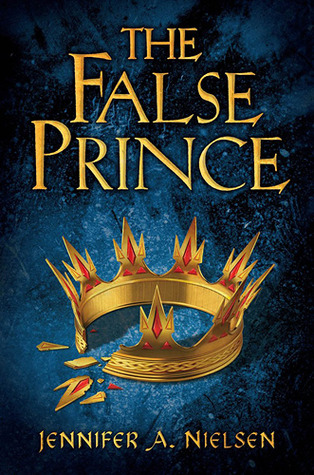
The False Prince (The Ascendance Trilogy, #1)
Source
The False Prince and The Runaway King, books 1 and 2 in the Ascendance Trilogy by Jennifer A. Neilsen. These books are basically a poor man's Queen's Thief by Megan Turner Walen. If you liked Gen's voice and character, you'll find a similar one in these books. But just read The Queen's Thief books instead. They're so much better.

The Messenger and Son by Lois Lowry, books 3 and 4 of The Giver Quartet. I read The Giver with my GT Language Arts class this semester, and so decided to tackle the last two books in the series. I read Gathering Blue (book 2) several years ago and really did not like it. The Messenger and Son were just okay. After the rich complexity and depth of The Giver, they just didn't measure up. If you're a fan of The Giver and you like the ambiguity of the ending, I would recommend not reading these books. The answers to the questions are not nearly as satisfying as the ambiguity.

Recommendable Rereads:
The Glass Castle by Jeannette Walls - I re-read this for book club, and I may have mentioned this in a book review a few years ago, but it's fantastic. Read it.

The Giver by Lois Lowry - Also re-read for book club, and then again for school. I re-read this book twice in 2015. And I can't wait to have an excuse to read it again.

Most Thought Provoking:
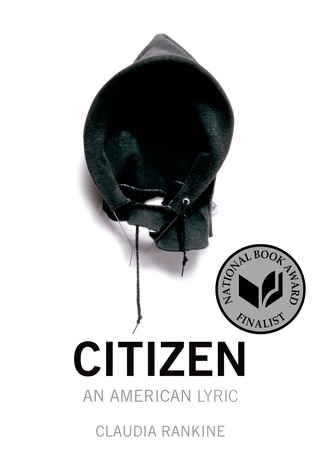
Citizen: An American Lyric
Source
Citizen: An American Lyric by Claudia Rankin and Between the World and Me by Ta-Nehsi Coates. I had to read these two books for my Multicultural American Literature course. Truthfully, I would probably never have read these books if it wasn't for a class, but I'm glad I did. They challenged my worldview and some of my preconceptions about the world around me, and that's what books should do, right? As much as I'd really rather just read books about dragon slippers and children fighting space battles, it's important to read books that offer a different perspective on the world as we know it. Do I agree with everything presented by Rankin and Coates? No, I don't - but I appreciate being able to see things from their point of view.

Favorite Books:
In part because I read a lot of not-incredible book, and in part because I read a lot of incredible books, I don't have an Absolute Favorite for the year. The following books are the ones that stood out, that I enjoyed, talked about, and thought about long after I finished the last page.

The River of Doubt: Theodore Roosevelt's Darkest Journey
Source
The River of Doubt: Theodore Roosevelt's Darkest Journey by Candice Millard. Friends, I don't read a lot of nonfiction,  mostly because I like books about dragon slippers and children fighting space battles, and those are not real, apparently. But I read The River of Doubt for my book club, and it was definitely one of my favorites for the year. It's an intriguing story, as well as historically interesting. It is not about Teddy Roosevelt as president, but rather after his presidency.


Wonder
Source
Wonder by R.J. Palacio. A fifth grade boy with a rare disease that causes his features to be disfigured goes to regular school for the first time. You should read this book if you're a fifth grader, if you're a fifth grade teacher, or if you are a human being.

The Martian by Andy Weir. I don't think anyone is applauding Weir's work for being particularly literary or anything - but it does have a special "something" about it. I love survival stories - I always have. I read the unabridged version of Robinson Crusoe by the fifth grade. I poured over the missionary medical book Where There is No Doctor many,  many times in my childhood, and consequently by the age of eight or so could tell you how to get venom out of a snake bite (duh: slit two holes around the snake bite and suck it out and spit - quickly!) and how to build the most healthy latrines (duh: make sure they are down stream from where the drinking water is taken!). So, The Martian is totally my kind of book. It's funny (let's be honest: it's funnier than Robinson Crusoe, but so is watching paint dry, so that's not a great example), it's endearing, and all that good stuff. Read it before you see the movie.

In the Woods and The Likeness, books 1 and 2 of The Dublin Murder Squad by Tana French. I happened upon these books because I saw the title "In the Woods" and immediately sang to myself "Into the Woods!" and picked up the book. It's nothing to do with fractured fairy tale musicals, but it's a psychological murder mystery. Each book in the series is told from the perspective of a different, peripheral character from the previous book. It's important to know that so that you don't get too attached. It's a series in that they all take place in Dublin, and they are all loosely affiliated with the homicide unit. There's five in the series now.

Ender's Shadow (Ender's Shadow, #1)
Source
Ender's Shadow by Orsen Scot Card. I don't know why it's taken me 30 years to read this book, but it did. I've read Ender's Game several times (read: four or five...), and I've read the rest of the series, which gets progressively stranger and stranger. Because the rest of the books in the series were so strange, I didn't want to read Ender's Shadow. I'm glad I finally did - it's remarkable. It's not Ender's Game, but it's not porcine-tree-aliens, either. It's Bean's story, told parallel to the events of Ender's Game. I would recommend reading Ender's Game, first - so consider this a two-fer.

Goals for 2016:
I would really like to finish Anna Karenina and In Cold Blood and The Other Wes Moore and 1Q84 and several others that I started but failed to finish. I would like to start (and finish) Cloud Atlas and The Great Divorce and One Hundred Years of Solitude and several of the other books I have on my to-read list.

But mostly - mostly - I just want to read a lot. I do so hate setting resolutions, because I'm rather dreadful at keeping them. My goals for 2016 are simply this: that I devote more hours to reading than I do watching television (harder than it sounds) or playing candy crush (harder than it sounds), and that I balance my avid taste for fiction with a sensible dose of nonfiction (harder than it sounds).

What have you read and loved (or hated) in 2015? What are you looking forward to reading in 2016?

Happy Reading, friends!


Book Reviews from Years Past (In case this post wasn't long enough for you...)
2013-2014
2012
2011 - Part II & Part III (Yes, apparently it was a THREE PARTER that year. I have no life - have I ever mentioned that?)

Sunday, January 4, 2015

The 2014 (and 2013) Book Review

In which I review the best and worst books read in 2014 (and a few from 2013).

(Warning - this post is really, really long. And I don't care.)

Last year I forgot to write my annual book review. I just...forgot. Not that it has become such an important part of your lives that my failure to write it resulted in a cosmic shift in the sands of time or anything (I honestly don't even know what that sentence means), but still. I forgot. I remembered around March, and by March, I didn't care very much and decided to lump 2013 in with 2014 - that is, if I remember to do a book review for 2014.


Two-Thousand-and-Thirteen

Before I start with 2014's books, here are a few of my favorite reads of 2013:

The Goose Girl by Shannon Hale
This is the sort of book I can't wait to re-read while I'm actually reading the book! Even for an avid reader, these sorts of books are few and far between; as much as I love to read, I don't often reread novels, or at least, not for many years.

I want to reread The Goose Girl, and soon.

Ani is a princess of a small kingdom who is sent off to marry the prince of the bigger, fiercer kingdom over the mountains from her home. She is double-crossed by her servants, and forced to work as the king's goose girl as she tries to regain her identity and save both kingdoms from going to war.

The Girl Who Circumnavigated Fairyland in a Ship of Her Own Making by Catherynne Valente

It took me a long time to read this book, and a long time to think about what to say in a review. The Girl Who Circumnavigated Fairyland in a Ship of Her Own Making (Let's call it The Girl Who... from this point on) is a strange, fantastical, incredible children's novel. It's the sort of book I think I'd like to read to my own children some day, the sort of book I could imagine, if I had read it as a child, sparking thousands of hours of pretend time in the backyard. It's not for everyone - the language is rich and convoluted and beautiful and confusing at times. The imagery is remarkable - and strange. The story is quite different - Valente has an awesome and bizarre imagination. Reading The Girl Who is a bit like eating Chocolate Mousse. I love Chocolate Mousse - but if I eat it too fast, I get a bit woozy from the richness. 


Rainbow Rowell - an author, not a book - Eleanor and Park, Fan Girl, and Attachments
It's hard to explain Rainbow Rowell's books. She writes young adult fiction, but it's so much more than that. She has a way of describing things that just...says it exactly the way I would hope that I would say it, were I writing these stories. She's best known for Eleanor and Park, which is excellent, but give her other books a try. However, I can't really recommend her most recent novel, Landline - I just didn't really get it, sadly.

The Bryant and May mystery series by Christopher Fowler.
This is the silliest series about two geriatric detectives on the loose, solving mysteries in London. Most of the books feature impossible locked-room type mysteries, very-old men crawling through sewers and wearing rather dodgy sweaters with pockets filled with string and old scones and occasionally small animals (I kid you not). I really enjoyed the earlier books in this series, and then sort of lost steam with the later books. What I love about them, apart from the humor (and some really clever mysteries) is the love affair with London that the books convey - each book is about a different aspect of London. And I love London. I was supposed to be born British, and it is one of the greatest disappointments of my life that I am not. So, if you, like me, have an affinity for that great city, you'll enjoy Bryant and May for the fun romp through London-
town.

My least favorite book of 2014? 
Without a doubt, it was Gone Girl by Gillian Flynn. While I appreciate the potential literary quality of the book - on a sort of academic level - never have I read a book that made me want to vomit while I was reading it. Actually, that's a lie - the Game of Thrones books also had that physical effect on me (and I stopped in the middle of book three and never have looked back).


Two-Thousand-and-Fourteen

2014 has been a rather skimpy reading year for me. I usually set a goal of reading 52 books a year...one book a week. That doesn't mean that I actually read one book a week, but during summer and breaks, I often consume one book a day, so it's not that hard for me. Unfortunately, I fell rather short in 2014 - by twenty-four books. Ridiculous! I think I spent too much time watching Scandal this summer, and not enough time catching up on my Tolstoy. And by catching up on my Tolstoy, I mean reading Tolstoy, because I haven't successfully completed any of his novels yet.

Resounding Meh:


Imperfect Bliss by Susan Fales-Hill
Dear Jane Austen Fans with a Desire to Pen Your Own Novel:
If you are truly a fan of Jane Austen, please do not attempt to write a Pride and Prejudice novel in the 21st century. I have rarely found a really good retelling of Pride and Prejudice in print - Bridget Jones's Diary is probably the exception.

Imperfect Bliss is the story of Bliss - Elizabeth - divorced-mom whose sister is chosen as the "Virgin" on a Bachelorette-style reality TV shows. Being the Elizabeth Bennett character, she is of course disapproving of her families' antics, etc, etc, etc.

This novel was the sort of novel that couldn't find itself - was it trying to be chick lit? Was it a comedy of manners? Was it Austenesque? Was it trying to elevate chick lit? There are clear parallels to P&P, but of course with the usual 21st century twists. The author seemed to struggle between wanting to write in a more contemporary style and wanting to write with Austen's prose. The result were awkward metaphors, out-of-place word choice and unwieldy cultural references.

If you want to experience Pride and Prejudice in the 21st century, go watch the Lizzie Bennet Diaries. As an English teacher, it's rare for me to recommend a video over a book, but in this case, the LBDs succeed, hands down.

(Oddly enough, my 2012 Resounding Meh was also an attempted Pride and Prejudice spin-off or sequel or whatever - for some reason, I keep reading them, hoping that someone will finally "get" it.)

Bossypants by Tina Fey
Before I begin, let's get one thing clear: I. Love. Tina. Fey.

Bossypants was funny (I literally LOLed multiple times - and you know I hate the term LOL with basically the passion of a thousand burning suns, so I must have really LOLed.). I liked some of her message (not all, as I fall on the conservative side of most things, well, particularly social issues, 9/10, I think). I'm still not entirely sure what her thesis was, which is a problem, but I'm not certain if it's her problem, or mine, since I read it rather quickly. I enjoyed her anecdotes and wise-cracks about growing up, working on SNL, playing Sarah Palin, creating 30 Rock, motherhood, etc. It wasn't really a memoir in the chronological sense - it was more like a series of slightly related essays, which is fine, but I am not sure that it was either - memoir or essays? [I'm a big fan of Erma Bombeck, whom I discovered, oddly enough, as a fifteen year old (and somehow related to, despite the fact that I wasn't a 40-something suburban mom with a septic tank problem) and Fey's motherhood and growing-up "essays" (chapters?) were quite a lot like Erma Bombeck...but were they supposed be? Is Tina Fey going to read this review and get offended that I compared her voice to Erma Bombeck and lambaste me in her next memoir? Part of me really hopes so. I'm rambling, I know.] It jumped around in time too much. I wasn't really sure what to expect from the next chapter. I think one of the comments on the book probably said it best: this is a book that is to be listened too. Fey's voice is loud and clear in the book, and that's great - but it's a little too conversational for a book. I would love to listen to this, and I wish that I had. I may even go back and listen to it, because, I really like Tina Fey, and I'd like to listen to her tell her stories. I'm just not so sure that I want to read her telling her stories.

Of course, it's a lot better than most celebrity memoirs (no disgusting sexual escapades related, for which I am super-grateful, because ew.), and I'm positive Fey wrote it herself, which is step of from most of them. So, read it if you like her. I don't think it's the earth-shattering celebrity memoir of the century, but as memoirs go, it's readable and likable, and you don't feel disgusted with her at the end of the book.

The Worst:

The Crown Tower by Michael J. Sullivan
So, I love fantasy. I will never deny this. And, I'm ever on the hunt for good fantasy. Which means I tend to read a lot of crappy fantasy in the meantime. Goodreads recommended this series to me, based on my reading history, and I thought, well, what the heck? The reviews were favorable, so, I picked up the prequel, which was a mistake.

I haven't read a lot of fan fiction (not a rabbit-hole I want to stumble down). But I imagine it would read a lot like The Crown Tower. This book felt like it was fan-fiction of the author's earlier works. I hadn't read the author's other books, but I got the impression that I would appreciate this one much more, had I read the other series. The author admittedly encourages readers to read first the books that come chronologically later. I have a problem with this because I just wonder what is the point of writing a pre-quel that doesn't have the same vim and verve as your other books. An example of a good pre-quel is Asimov's Forward the Foundation - though he wrote it much later, I believe a person can pick that up seamlessly without the sense that it would make much more sense to have read the "later" (chronologically speaking) books in the Foundation series.

Since Michael J. Sullivan wrote these after the "later" books, it felt like he was sort of pandering to what his readers might want to know about these characters. There was very little point to this book, which bothered me. The Crown Tower is the story of the two characters of his actual series and how they met. The main story line was slightly interesting – the two characters eventually become master thieves or something? But, if you want to read a fantasy series about master-thieves, read The Gentlemen Bastards series by Scott Lynch- so, so, so good. An author who not only writes well, but creates rich and likable characters. You will laugh, you will cry (seriously: you. will. cry.) I admit that's what I was hoping for with the Crown Tower, though, of course, no one - no one, I tell you - can ever quite be a Locke Lamora.

The worst part is that I continued to try reading the series, and honestly...I stalled out half way through the last book and haven't been able to pick up it up again. So, I definitely do. not. recommend.


Honorable Mention:

The Fault in Our Stars by John Green
Please don't hate me for this one. But, guys, it was really, really good. And John Green is probably my soul mate - seriously. And The Fault in Our Stars was completely different than I expected. But I should have expected it to be good because I love John Green. (If you haven't watched his Crash Course videos, you 1) aren't terribly well informed about world history and 2) are totally missing out on an incredible experience.) I expected The Fault in Our Stars to basically be Twilight with cancer. And it wasn't at all. It was much more. It had literary depth and quality and made me think and make me laugh and made me cry. That's all I'm going to say about it, lest you think I've morphed into an emotional fifteen year old girl. Which, lately, that's how I feel so, whatever. 

The Rosie Project by Graeme Simsion
What would it look like if a high-functioning, albeit undiagnosed, man with Asperger's Syndrome set out to find the perfect mate? The Rosie Project explores this - Don Tillman decides to find himself a wife - and very methodically sets about looking for the perfect woman. Of course he finds the perfect woman, but just not the woman he planned for. It's a romance, but it's more than that. I honestly didn't even feel like I was reading a romance. You're routing for Don the whole time - but it's a little like reading a romance novel in which Sheldon Cooper decides to set out to find a wife (if he cast aside Amy or something). If Sheldon drives you crazy, maybe steer clear of The Rosie Project.

The Hypnotist's Love Story by Liane Moriarty
I randomly picked up this book, because I wanted to read another book by the same author - What Alice Forgot - but the library didn't have it, so I got this one. Oddly enough, I eventually checked out What Alice Forgot, but couldn't get into it, so I'm glad I found this one first, because I probably wouldn't have tried to read something else by her (does that make sense?).

The Hypnotist's Love Story is about a woman (who happens to be a hypnotist) who meets a guy online and everything is great - and then it turns out the guy has a stalker (an obsessive ex-girlfriend). And then the book becomes more about the woman and the stalker than the woman and the boyfriend. It's a really good read. It was challenging and funny and sad. It was really, really thought provoking. Don't be deceived by the chick-lit sounding plot and cover - it's really not. You know I wouldn't recommend Chick-lit, right? You know that - right?

Mr. Penumbra's Twenty-Four Hour Bookshop by Robin Sloane
If you take books, fonts, Google, computer programming, dragons, secret societies, hackers, and immortality, what pops out is Mr. Penumbra's Twenty-Four Hour Bookshop. It's a relatively easy read, language-wise. I can't even really explain what the book is about, other than that long list of random things. Ultimately, it's about the power of friendship - which sounds super-corny, but read the book - you'll find it's not.


The Best:

The Ocean at the End of the Lane by Neil Gaiman
Neil Gaiman is an excellent author whose books I do not always love. I also read American Gods this year, and while I "got" it, and I got that it was a really impressive literary feat, and probably something that will be studied in college English classes in the future, I didn't like American Gods. It made me uncomfortable and a little depressed and unhappy. 

But, The Ocean at the End of the Lane was so different. I just really loved this story of childhood, and the frightening things that happen in childhood - and the underlying tale of God's redemption and Grace and salvation. Look, I don't try and force Christian meaning on books. My students used to asked me about that, and honestly, I think we need to be very careful how we interpret books as Christians. It's okay to see the Christian symbolism for ourselves, but be careful in interpreting a book for it's Christian imagery. And, I'd caution the same for The Ocean at the End of the Lane - but whether Gaiman intended such a strong Christian allegory or not, I think it's there. I finished the book feeling overwhelmed by God's grace and Christ's sacrifice. It reminded me of my own fallenness, and my own inability to do anything about my sin - that I need God's grace. The writing is also beautiful, and the story is gripping and exciting and frightening and I couldn't read it at night as I was going to bed because parts of the story are terrible (because it's a Neil Gaiman novel, of course).

The best books stick with you, and The Ocean at the End of the Lane has stuck with me. It hasn't faded. I'd like to teach it one day, if I'm ever teaching upper level high school again (and if I ever have the freedom to teach what I want to teach again).


The Five Books I Want to Read in 2015
(Because this post wasn't long enough already...)

1. Anna Karenina by Leo Tolstoy. Nope, never read it. Yes, I know that's a travesty. I'll try and rectify that. By the way, rectify is a really gross sounding word.

2. The Great Divorce by C.S. Lewis. Only read half of it. Just saw it as a play. Would like to read the whole thing.

3. Cloud Atlas by David Mitchell. Don't know much about it.

4. In Cold Blood by Truman Capote. I started it last year - really enjoyed what I read of it, but somehow didn't finish it. 

5. The third book in the Kingkiller Chronicles by Patrick Rothfuss. Which isn't published yet, and doesn't have a release date yet. Please, oh, please, Rothfuss...finish writing the book. 


Okay - time to pay it forward: what books stood out to you in 2014? Make your recommendations in the comments!

Until next year's novel length book review! Happy 2015, folks!